What this service covers
Measurement for first screenings, home sales, post-mitigation checks, and borderline results that need a second look. Devices are placed by licensed Nebraska radon specialists to the ANSI/AARST MAH-2023 residential protocol, on the lowest lived-in level under closed-house conditions, and the written report records device type, placement, timing, and result.
Typical pricing
$150-$300
Pricing varies by job specifics. Free phone or on-site quotes; fixed pricing once the technician has assessed the job.
Short-term, long-term, and continuous monitors in the metro
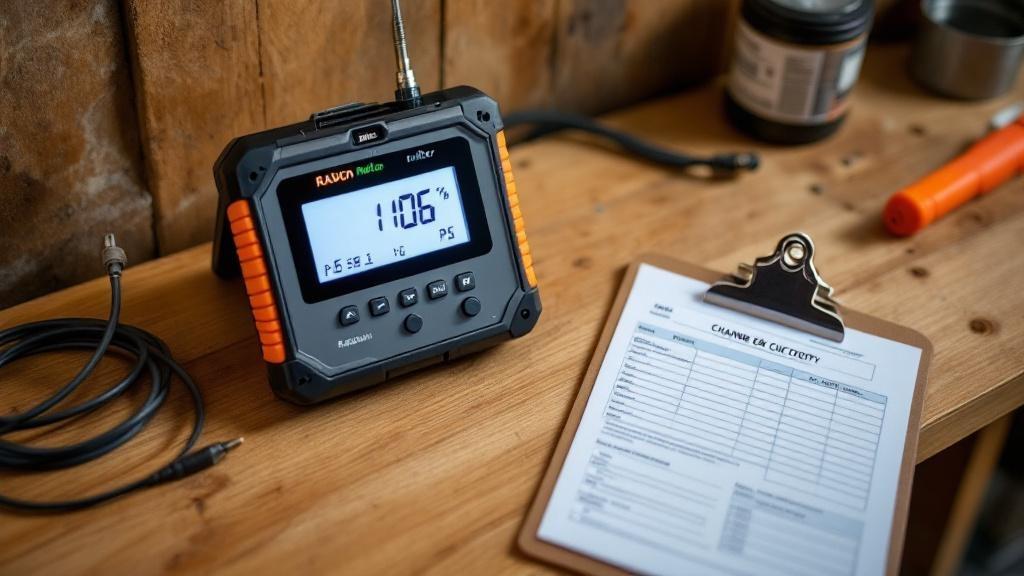
A short-term test, typically two to seven days with a charcoal device or a continuous monitor, answers the question most people are asking: is this house elevated right now, under controlled conditions. It is the tool for a first screening and the only practical tool inside a purchase contract. A long-term test, more than 90 days with an alpha-track detector, averages across seasons and comes closest to the year-round exposure the EPA's risk figures describe.
The metro's climate argues for running short tests in the heating season. An Omaha winter keeps houses closed and the stack effect strong, so a January result reflects the conditions that matter; a July test with the windows open all spring behind it understates the house. Continuous monitors add hourly resolution, which shows whether a result was steady or spiked with a weather front crossing the Missouri valley.
A professional short-term test runs $150 to $300 here. Hardware-store kits cost $15 to $30 and give a sound screening number when the placement rules are followed, and the Nebraska DHHS radon program points homeowners to low-cost kits as well. What a kit cannot do is anchor a real estate negotiation, which is where the licensed measurement and the documented chain of custody earn their fee.
Placement and closed-house conditions
A radon number is only as good as the conditions around it. The device belongs on the lowest level someone lives in or could live in, in a real room rather than a laundry, bathroom, or crawl, up off the floor, away from exterior walls, drafts, heat sources, and the sump. For tests shorter than about four days, the house stays closed starting twelve hours before the device goes out: windows shut, doors used only for coming and going, heat running normally.
Those rules exist because the failure modes are so ordinary. A test by a drafty walkout door in Bennington, a device on a windowsill in a Ralston ranch, or a basement test run during a week of open windows each produces a number that looks precise and means little. The ANSI/AARST MAH-2023 protocol that licensed measurement follows writes all of this down, which is why two professional tests of the same house agree and two casual ones often do not.
One Omaha-specific note: test every foundation type the house has. A split-entry in Millard with a basement under half the house and a garden level under the rest is two slabs at two depths, and the protocol treats them as two measurements, not one.
What to do with the result
At 4.0 pCi/L or higher, the EPA says fix the home, and between 2.0 and 4.0 it recommends considering a fix, because no level is risk-free. A first short-term result in that borderline band is the weakest possible basis for a decision, so the usual next step is either a second short-term test with the house properly closed or a long-term device left out across the winter.
Context helps calibrate expectations without replacing your own number. Douglas County's 19,027 pre-mitigation measurements from October 2019 to September 2024 averaged 4.8 pCi/L, Sarpy's 5,649 averaged 5.3, and the ring counties ran 5.3 to 8.0, so an elevated first result in this metro is the expected case, not an anomaly. Two houses on one street can still differ by a factor of five, which is the whole argument for testing rather than assuming.
Keep the report. Retest every two years, after foundation or HVAC work, and whenever someone starts sleeping or working on the lowest level. When a result calls for a system, the mitigation service picks up exactly where the report leaves off.
Service area
Radon Testing is available across the Omaha metro and Council Bluffs. Per-suburb pages: